Thought You Should See This, June 22nd, 2012

Here’s what happened this week on the innovation/design-themed blog I write:

Designer Armin Vit went on a rant against the use of Helvetica. “The main argument of using Helvetica is that it’s “neutral,” he sneered. “That is absolute bullshit. There is nothing neutral about Helvetica.” Well, he’s got a point.

Marina Abramovic: The Artist Is Present has opened at cinemas. The documentary is arguably more hagiography than critical analysis, but I loved to see the playful and charming side of the legendary performance artist.

Fascinating and thought-provoking video looks at all that goes into creating food advertising imagery, in this case photographing a McDonald’s cheeseburger.

Now that Microsoft is building and selling its own tablet, the Surface (top), most people think it’s copying Apple,” writes Jay Yarow over at Business Insider. He then goes on to explain why this is absolutely not what’s happening.

Martha Stewart CraftStudio represents no less than a profound change in thinking at the company. As Chief Integration and Creative Director, Gael Towey noted to me, the app helps to put power in the hands of the consumers. A great example of a company noting a shift in the economy and customer needs–and looking to do something about it.

Finally, watch out for an upcoming book from John Edson, president of Lunar. Design Like Apple contains seven principles for implementing sensible, thoughtful design. The book’s available for pre-order now.

Thought You Should See This, June 15th, 2012

This week’s Thought You Should See This update for my colleagues at Doblin and anyone interested in innovation and design.

Top marks this week to Larry Keeley, whose pearls of wisdom form the foreword to a new book on mobile interaction design. As Larry writes, “With mobile devices, we are today where automobiles were when the Model T was the hottest thing on wheels.” Be sure to check it out.

Brooklyn Castle is a documentary, the tale of a school in Brooklyn whose students generally hail from below the poverty line. However, this isn’t your usual hand-wringing, doom and gloom-style documentary. IS 318 boasts 26 national chess titles—more than any other junior high school in the country—and the documentary focuses on the hopes and dreams of some of the chess club’s young participants. It’s simultaneously uplifting and heartbreaking.

Pixar artist Emma Coats put together a great list of advice on how to tell a good story. My favorite: “Putting it on paper lets you start fixing it. If it stays in your head, a perfect idea, you’ll never share it with anyone.”

American Pain: The Largest U.S. Pill Mill’s Rise and Fall tells the story of Christopher and Jeffrey George, twin brothers who opened their first “pain clinic” in Fort Lauderdale in 2008 and both of whom are now in jail for racketeering conspiracy. It’s a fascinating, sobering tale of an industry whose denizens pushed the boundaries of the law as far as they’d possibly go, and then pushed them just a little bit further.

Sarah Caddick is the Neuroscience Advisor to David Sainsbury and a senior advisor to the Gatsby Charitable Foundation—a big funder of scientific research, based in London. I spoke with her about her thoughts around the brain, our impressions of it, and how we need to turn what we think we know on its heads.

For a little light relief, check out the stop-motion animation promo for Delta Heavy. Although what the director has against classic games like Hungry Hippos and Connect 4 is anyone’s guess.

Geo-strategist Parag Khanna outlines his idea of the “hybrid economy,” arguing that we all need to boost our TQ, our “technology quotient.” “Start saving as much for physical enhancement as for education and retirement, he writes. “Get familiar with virtual currencies. Invest in a persuasive avatar, even, to represent you online. And welcome to the Hybrid Age.” Quick read, worth the effort.

Jonah Lehrer’s new book on creativity takes a beating from The New Republic, which wonders why we all pursue story-telling as our preferred means of communicating difficult topics.

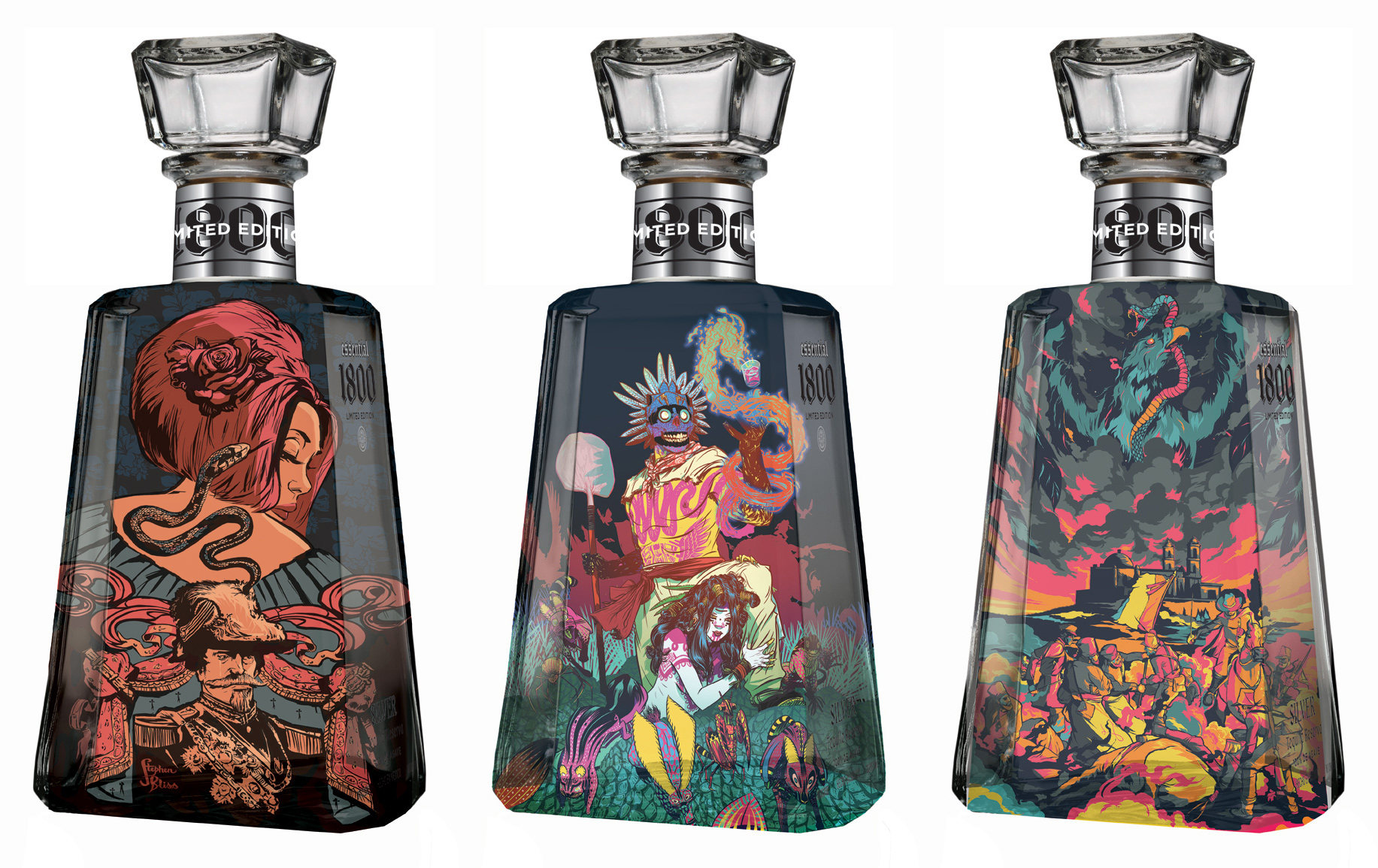
And finally, six international artists take on an interesting brief… redesigning the tequila bottle. The results (shown top) are punchy, funky, graphic and really quite beautiful.

Thought You Should See This, June 8th, 2012

Here’s this week’s update on Thought You Should See This, the innovation/design-related blog I write:

If you read one thing this week, make sure it’s Paul Ford’s gorgeous speech to the graduates of the MFA Interaction Design at SVA. A stunningly lyrical take on the impact these designers will have on the world, it’s thought-provoking, inspiring and beautifully, beautifully written.

GBN’s co-founder Peter Schwartz turned up in the New York Times’ innovation special, sharing his view that in 50 years we’ll be able to drive cars with our minds. The rest of the piece, 32 Innovations That Will Change Your Tomorrow, is also worth checking out.

MBA Jargon Watch satirizes management and consulting jargon. It’s painfully funny. Read and beware.

British public artists Greyworld sounded off about being asked to come into a big company to “inspire” — without being compensated for their time or thinking. This has been an all-too common practice for years, determining a rethink of the phrase “quid pro quo.”

“We now spend twice as much on beer as the government spends on research.” How depressing is that?

Honda’s Fit EV is the most efficient new car in the United States, and has caused some environment writers to get giddy with excitement. Wrote one: “This could be the Model-T of the electric age.” Right then! *Image shown c/o Honda.

Thought You Should See This, June 1st, 2012

This week’s update from the innovation/design-themed blog I write. Pretty flimsy this week (short week and I’m just back from England and walloped by jetlag. Well, that’s my excuse and I’m sticking with it.)

Above is a great TED talk by Sebastian Deterding, who discusses the morality and ethical choices embedded in every design decision. Definitely worth taking the 12 minutes to watch.

Design collective Pentagram turned 40
, and created a geniusly clever video featuring much of their work to celebrate. 

Security technologist Bruce Schneier has a new book out. In Liars & Outliers, he takes on the all-important topic of trust, in all its many manifestations. I can safely say his is the most entertaining opening to a non-fiction book I’ve read in forever. 

Who says finance can’t be funny? This animation by political cartoonist Mark Fiore works perfectly as a parody of both the ongoing insanity of the financial industry—and the wincingly twee aphorisms of so much modern advertising. “Just because it’s your fault doesn’t mean others can’t suffer for you.” Ouch. 

File under hard to believe: The Nook version of War and Peace changed every instance of the words “kindle” and kindled” into “Nook” and “Nookd.” Both a funny story of the perils of the find-and-replace function–and an unnerving reminder of the silent power wielded by our digital overlords.