Ryan McGinness: Black Holes

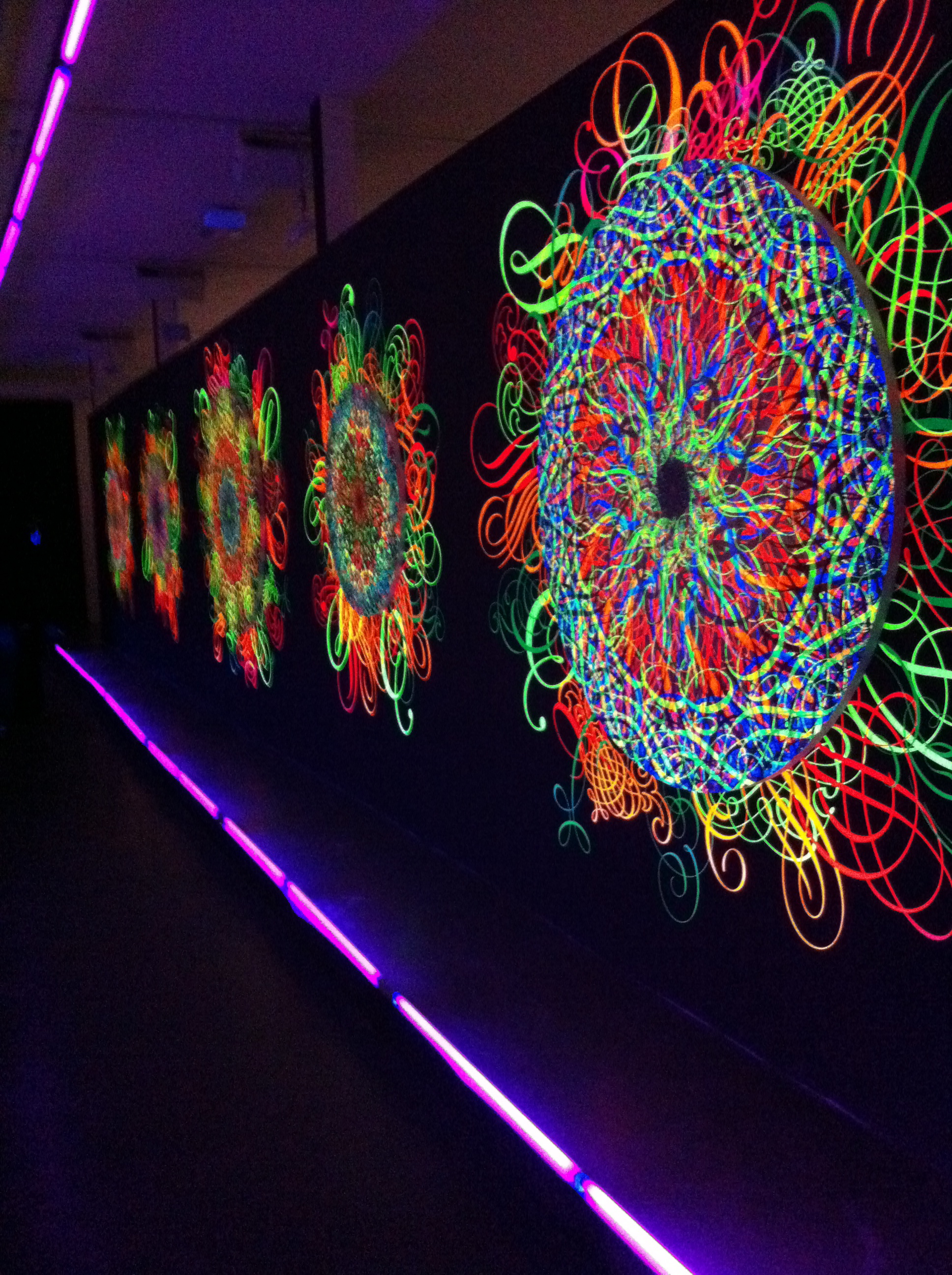
Last night, I went to celebrate artist Ryan McGinness’ latest installation, at Philips de Pury in Manhattan. Black Holes is an exhibition of work McGinness created from 2004-2010. The large round canvases are deceptive. On first glance they look like fairly simple spirograph-style images. But stand in front of them for any length of time, and get drawn in inexorably by the delicate, hypnotic shapes. Black holes, indeed.

<

For this exhibition, McGinness added a neon flourish, adding delicate wisps of vinyl around some of the canvases and lighting them with fluorescent light. One long stretch of these can be seen from the High Line walkway, sure to confuse and delight late-night tourists. Somehow the effect transcends the usual gaudiness of neon and is bewitching, poignant, and glorious. As are the newest, black-on-black canvases, which are subtle but somehow defiantly perfect. Gorgeous.

The need for gun regulation in the U.S.

The other night, I was in a cab on my way home to Brooklyn. As I sat in the back seat, I went into my usual mode of checking my phone and entirely ignoring the city streaming past the window. I didn’t pay much attention when I heard voices outside in the street. But I did look up when I heard yelling, and then froze to my seat when I suddenly heard the unthinkable: multiple shots being fired. Two things happened right then, both huge cliches: first, time slowed down, and I watched, mesmerised, as I saw a crowd of people run, bowlegged, in different directions. Then I heard myself ask incredulously, “was that *gunfire*?” And then I heard screaming, an otherworldly noise that cut right to the soul and gives me chills to recall.

What actually happened is still unclear, though it seems that a disagreement led to five people being injured, four shot in the legs, one in the arm. Many of the bystanders had been attending a basketball match at the school that’s right there on that corner, and I can vouch for the fact that many of those screaming lustily were incredibly young.

In the wake of the terrible events in Tucson, everyone is thinking a lot about guns and gun control, though this brought the issue rather closer to home than I’d expected. I truly remain baffled at the easy acceptance that any discussion of gun regulation is a complete political non-starter. Why is it so outrageous to suggest that there should be rules around who can own deadly weapons? Why is nonpartisan debate an impossibility?

Bill Maher puts it best: guns are at the heart of the psychology of the United States, and it seems that there’s a nationwide fantasy that owning a gun will somehow reduce violence and bloodshed. That’s logic that’s upside down and horribly dangerous. Watch Maher discuss the issue with Jay Leno here.

CES: A Symbol of Global Vandalism

The Consumer Electronics Show closes today, after four frantic days in Las Vegas in which about 20,000 new consumer technology products were unveiled to an audience that last year attracted more than 125,000 people. This year, Samsung alone announced 75 new products.

I wasn’t there, but rather monitored announcements from a distance. And each one met a similar response: “What?” followed by, “But why?”

I honestly don’t want to knock the hard work of executives who are struggling to survive in a terrible economy. But really. 20,000 products? Each one the result of hours, days, weeks, months of meetings and discussions and agonized decision making. Each one apparently accompanied by a breathless press release describing how it represents genuine innovation, not to mention fabulous design. And yes, some of the products will probably even be a welcome addition to our gadget-laden homes. But this as the face of modern day innovation? Oy.

Before the show, Shawn Dubravac, Chief Economist and Director of Research of the Consumer Electronics Association reckoned that 80 tablet devices were to be announced at the show. 80?! What clearer way to illustrate the way that consumer product lemmings once again demonstrate why genuine innovation is both so rare and difficult to execute.

Yes, yes, there’s nothing wrong with a “fast follow” strategy. Just because one player puts a stake in the ground doesn’t mean there’s no room for improvement. I get that. But how many of these products represent genuine improvement, and how many are inferior versions created in the name of a company not wanting to be the wallflower at the party? How many were created with the consumer’s needs in mind, and how many in the name of oiling some executive’s career path up the corporate ladder?

And let’s not forget, all of these products use resources, not just the brains and energy of the supporting executives. We live in a world in which I constantly hear designers earnestly describe how committed they are to environmental responsibility. 20,000 products isn’t responsible. It’s vandalism.

I remember being so taken with IDEO CEO Tim Brown’s story of going on vacation to some exotic location, standing on a beach and stumbling across a toothbrush he’d helped to design that, discarded, had washed up on shore. This moment, Brown avowed, led him to realize the non-degradable consequences of his design work and to commit to a sustainably minded future. Cradle to cradle architect Bill McDonough, meanwhile, writes and eloquently challenges us to think about garbage. When we throw something away, where exactly is “away”? he asks.

And yet somehow these individual moments don’t seem to add up to much. Rather, they still add up to 20,000 new products. This year. Who’s paying attention to this? Who’s thinking about what this means on both a macro corporate level and for individuals? Who’s connecting the dots between environmental lip service and the rampant guzzling of scarce resources that this represents.

Suddenly that gimmicky product seems less cute and more like an obscene gesture.

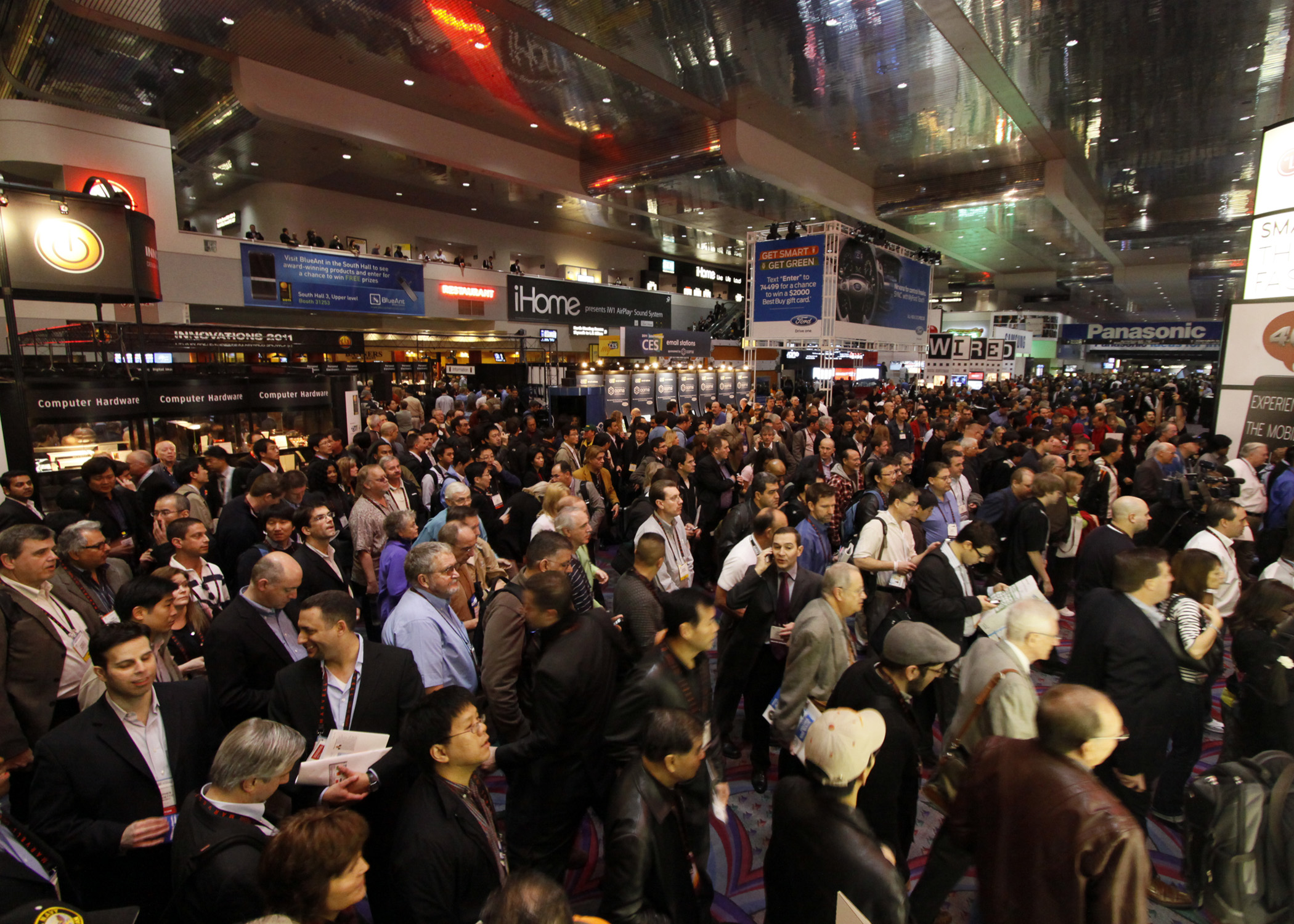
Image: Attendees at this year’s CES pour into the event’s Central Hall

What’s the impact of crowdsourced design on designers?

I’m off to Toronto in a few weeks to host a daylong symposium called Conversations in Design. This year’s theme is the thorny issue of crowdsourcing, and the curators are bringing in some important voices representing different points of view and different areas of the creative industries. One part of my duties involves interviewing visual artist and novelist Douglas Coupland, a prospect which thrills my inner geek. I’ll also be moderating a discussion between Roo Rogers, of Redscout Ventures and Hunter Tura, of Bruce Mau Design. The (supplied) theme of our conversation: “Does Collaborative Design and Crowdsourcing Negate the Need for Designers?” It’s a provocative question, no? Would love to hear thoughts, experiences, insights–and any questions you might have for any of the day’s participants. Thanks! I’ll post an update here after the event, too.