Thought You Should See This, January 27th, 2012

Last week’s Thought You Should See This update, for my friends at Doblin:

Doblin’s Brian Quinn gets top billing this week, for his excellent article in Fast Company, “Is Innovation Too Messy To Be Managed and Taught? Hardly.” It’s a super piece that takes a measured look at the value of the innovation practice. Do take a look.

Nerd out over old pictures of Manhattan, on show at a new exhibition at the Museum of the City of New York. Union Square and Columbus Circle as you’ve never seen them before (nor ever will again.)

One of the weirder stories of the week was the revelation that Disney, a key supporter of SOPA and PIPA, was selling a T-shirt with graphic “inspired by” Peter Saville’s iconic image for Joy Division’s Unknown Pleasures (above). Cue hysteria (the T-shirt has now been withdrawn from sale.)

Couple of cute videos to watch when you have a minute: a charming homage to the practice of reading a book; and Shynola’s thought-provoking, beautifully shot video for Coldplay song, Paradise.

Interesting piece in the Wall Street Journal, documenting the fledgling practice for companies to overlook the need for a resume in favor of a more Web-savvy style job application.

Dr Chrono is another entry into the world of electronic health records. With funding from various Silicon Valley bigwigs, it’s worth checking out.

This detailed report in the New York Times about Apple’s business practices within its factories in China makes for chilling reading. (Also, do listen to a This American Life episode on the same topic.)

Lovely piece on new architectural finds in Turkey. Some might argue that I picked up on this story solely so I could share one of my favorite pictures from last summer’s Istanbul vacation. And truth be known, they might have a point. But it’s also a glimpse of the truly painstaking nature of this type of work and the reminder that, doubtless, nothing we look at is truly what it seems

Finally, General Electric CMO Beth Comstock was logging video reports from the World Economic Forum in Davos. As you might imagine, she had some interesting insights into how leading executives and politicians are thinking about innovation.

Thought You Should See This, January 20th, 2012

This week’s Thought You Should See This update, for my friends at Doblin:

Doblin’s fearless leader, Larry Keeley, gets top billing this week, for a fortuitously timed piece on Kodak’s demise. (The piece was published in Fortune the day before the Rochester giant filed for bankruptcy protection.) The Kodak Lie digs into the organization’s deeper innovation failings, so be sure and read it.

Fortune writer, Adam Lashinsky, has a forthcoming book on real life at Apple, which looks like it’ll be well worth the read. I picked up on Bob Sutton’s favorable review, which took a close look at the section detailing the company’s organizational structure.

Super old school video of designer Herb Lubalin detailing the story of the evolution of the PBS logo. Great look at the designer/client relationship–and the often fraught branding design process.

British design critic, Rick Poynor assessed ongoing tension between design and management, a continued issue for anyone looking to build any kind of design presence in the world’s C-suites.

“Do what you love. It’s going to lead to where you want to go.” Creative genius, Wayne White, will be immortalized in the upcoming biopic, Beauty is Embarrassing, which will premiere in March at this year’s South by South West Film Festival. Watch the trailer and swoon.

I went on a bit of a SOPA/PIPA frenzy, capturing multiple perspectives, including Clay Shirky’s clear description of how we got where we are. Then I decided to immortalize the day-long, web-wide protest itself (Google’s blacked out home page shown, top.) So I asked six designers to subject the protests to a design critique, and then tried to extrapolate their thoughts to see what this said about the companies’ approach to design. A stretch, perhaps, but I do believe a serious point was made among the fun. (And seriously, some of the critiques are geniusly funny.)

Nike launched the Fuelband, its way to expand the popularity of its Nike+ platform to the less obviously sporty among us. I wondered what executives at Fitbit, a startup with a similar idea but rather less funds, must be thinking right now.

In a great example of the iteration that’s so vital to the innovation process, Burt Herman explains the evolution of Storify, a site designed to “create engaging social stories.”

Thought You Should See This, January 13th, 2012

This week’s Thought You Should See This update:

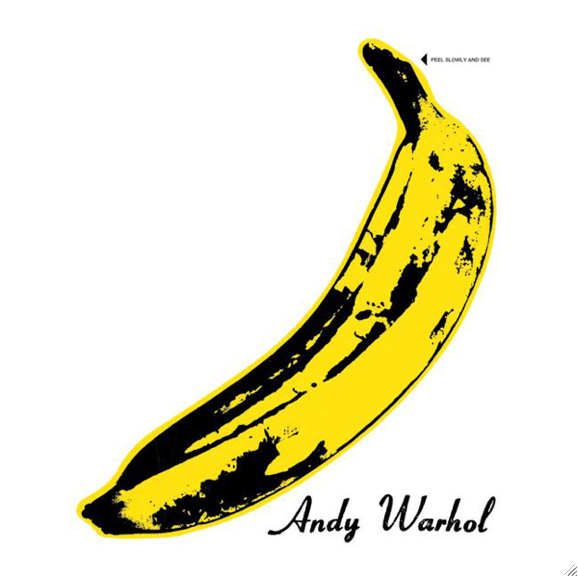
Be confused about what year it is, when you read about Lou Reed and John Cale of the Velvet Underground suing the Andy Warhol Foundation over the use of *that* banana image (above.)

This super-provocative piece about educational data-mining, Colleges Mine Data To Tailor Students’ Experience, raises as many questions as it answers, and is well worth a read.

Watch an amazing video about “realtime gesture recognition with contact microphones.” No, really. Watch it.

Think about design and… smell, and read about a series of “smell-walks” being held around the world in order to challenge participants to think about environments according to multiple senses, not just the obvious ones.

Challenge your perceptions of the state of the Japanese economy by reading this fascinating piece about The Myth of Japan’s Failure.

Consider the antipathy faced by legislators, litigators and lobbyists when it comes to thinking about innovation. In a great piece about the movie industry and the Stop Online Piracy Act, entrepreneur Steve Blank breaks it down in simple, if acidic, terms.

Be glad you didn’t have to attend the Consumer Electronics Show in Las Vegas this week. Laugh at the account of the Gizmodo reporter who did.

Consider the mis-application of design trends–and their potentially fatal consequences, by reading this Jalopnik piece looking at the integration of touchscreen technology into car dashboards.

Marvel at the polymathic wizardry of Dr Eric Lander, profiled in a New York Times piece that details his journey from math genius to human genome-finding pioneer to founding director of The Broad Institute at Harvard and MIT.

Enjoy a rant about Google’s introduction of “Search, Plus Your World.” “Google just broke its search engine,” writes Slate’s Farhad Manjoo. Do you agree?

Thought You Should See This, January 6th, 2012

Whoops. Forgot to post this last week. Kind of a bumper round-up of Thought You Should See This links to kick off the year:

Why Best Buy Is Going Out Of Business… Gradually, a *scathing* piece in Forbes about the failings of executives at the big box retailer.

How a Few Bad Apples Ruin Everything is a great piece by management professor, Bob Sutton, who makes an important point: “Superstars get a lot of attention from bosses. But bad apples deserve even more.”

Smart piece in The Economist looking at the hypothesis of my former BusinessWeek colleague, Mike Mandel, that today’s economy favors big companies rather than small ones. The arguments both for and against the idea are important for anyone thinking about innovation.

The Touchy-Feely Future of Technology is a super package from NPR that digs into the background, development and impact of tablet computers and touch technology.

RIP, Sori Yanagi, pioneer of Japanese industrial design, who died in Tokyo, aged 96. (Magazine spread showing his beautiful work shown, above, c/o soriyanagi.com.) Also, I didn’t note but definitely should have done: the amazing ceramicist Eva Zeisel also died, aged 105.

2012 predictions already seem so, well, last year, but one of writer Daniel Pink’s might come true sooner rather than later. He predicted the demise of two of Groupon, Newsweek and Kodak by yearend. Things sure aren’t looking good for the latter.

Mother Jones ran a horrific story detailing The FDA’s Christmas Present for Factory Farms. In a nutshell, the FDA has decided not to pursue its decades-long quest to limit the routine use of antibiotics on animal farms, ruling instead that now it will support voluntary reform. This made me grumpy.

2011 reportedly had the lowest movie-going audiences since 1995. In I’ll Tell You Why Movie Revenue is Dropping, Roger Ebert explains why.

Writer and “optimistic doomer”, John Thackara chats about the crisis (and opportunities) facing the design industry–and has a particularly useful breakdown/definition of social innovation.

IBM’s now-former CEO, Sam Palmisano shared his framework of four important “why” questions to ask at every moment.